
When I traveled to Minnesota, I had three clear objectives.
First, I wanted to talk directly to the protesters.
Second, I wanted to understand why they were there.
And third, I wanted to learn what they hoped to achieve.
For weeks, mainstream media — particularly conservative outlets, but some independent voices as well — had pushed a narrative that these protesters were “paid agitators,” anti-American radicals obstructing law enforcement who needed to be dealt with. That claim stood out to me. It felt like propaganda designed to dismiss their message before anyone even heard it.
So I did what journalists are supposed to do: I went on the ground.
The Federal Building: Listening First
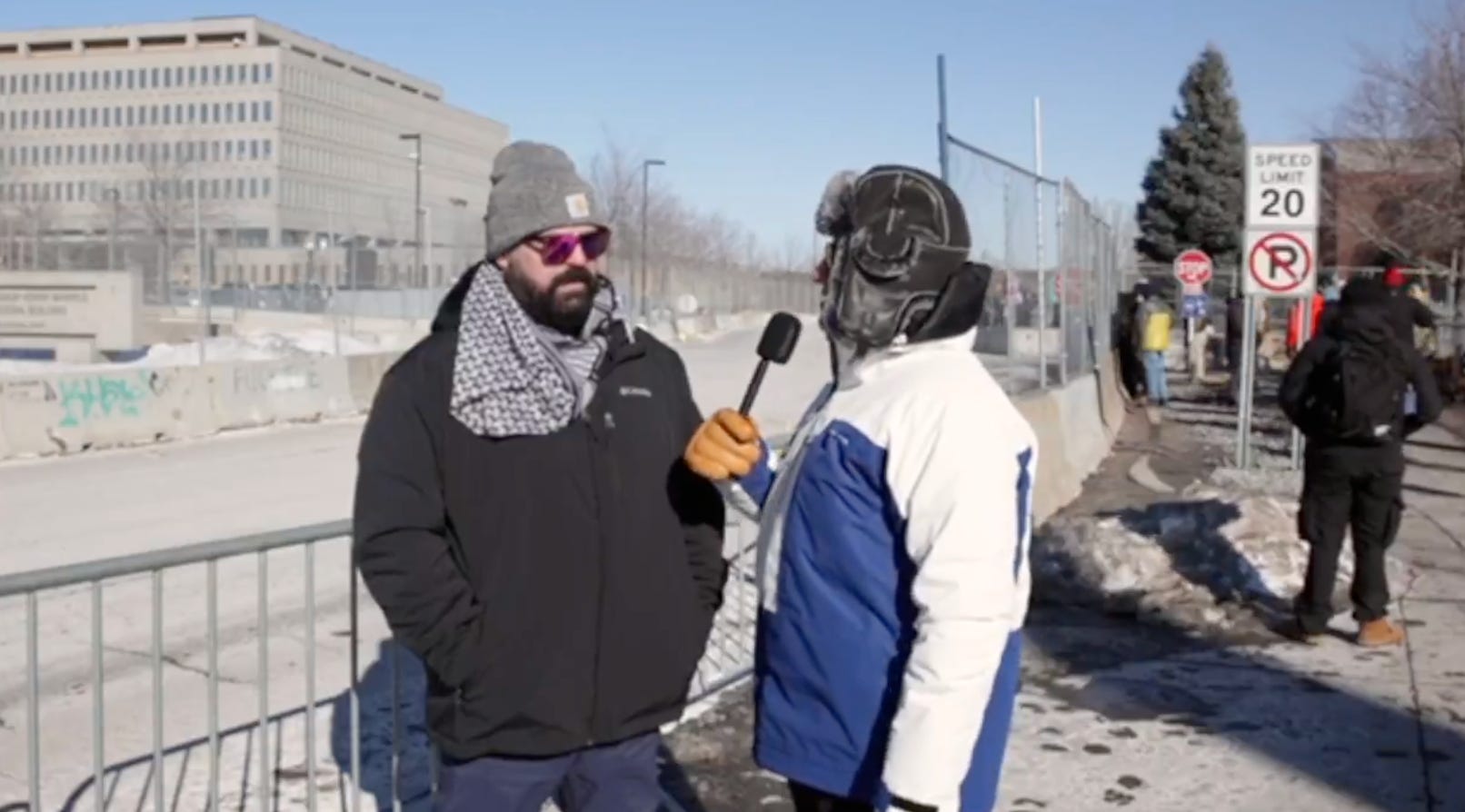
My first stop was the Federal Whipple Building in downtown Minneapolis — ground zero for much of the protest activity. Some nights ended in tear gas. Some ended in arrests. But for the most part, it functioned as a tense standoff between ICE and the community.
The first person I interviewed was a lawyer. Not an activist organizer. Not someone holding a megaphone. Just a citizen who felt compelled to show up.
He told me he believed the government was overreaching. That ICE was targeting neighbors rather than dangerous criminals. He argued that the agency itself routinely operated outside the spirit — and sometimes the letter — of the law. Most of all, he felt compelled by conscience.
And before I even asked, he addressed the rumor:
No, he wasn’t being paid.
A Pattern Emerges
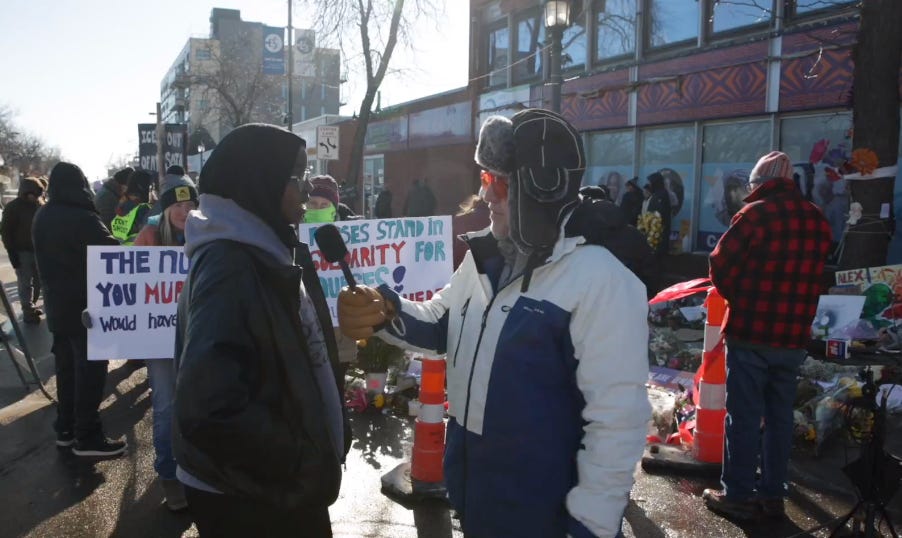
The next day, at the memorial site of Alex Pretti, I spoke with a young Somali woman. She immediately rejected the idea that she was being paid. When I asked why she was there, her answer echoed the lawyer’s.
“These are our workers,” she said. “Our babysitters. Our mechanics. The people at our restaurants. They’re part of our community.”
She believed the people being detained were not the hardened criminals described by federal officials, but ordinary members of society. She said she was there to protect the vulnerable.
Then came a veteran — someone who knew Pretti. Again: not paid. Again: concerned about civil liberties. Again: describing ICE as an institution he believed trampled constitutional protections.
Then a nonprofit director. Same answer. Same denial of payment. Same reasoning — love of neighbor, protection of civil liberties, opposition to what they saw as lawless enforcement.
By the fourth interview, the pattern was undeniable.
Every single person I spoke with rejected the idea that they were there for a paycheck. And every single one gave thoughtful, consistent reasons for showing up.
That mattered.
Because when you dismiss people as “paid agitators,” you don’t just insult them — you erase their motives. You flatten complex human emotion into a caricature. And that’s not journalism.
The Hardest Interview
The most difficult conversation I had was with a young Latino man who asked not to show his face.
His father had been detained inside a McDonald’s he worked at. Not for murder. Not for assault. Not for any violent offense. His only violation was being undocumented.
The young man was heartbroken. His father, he believed, would soon be deported.
He wasn’t shouting. He wasn’t burning anything. He wasn’t paid.
He was grieving.

The Hotel Protest
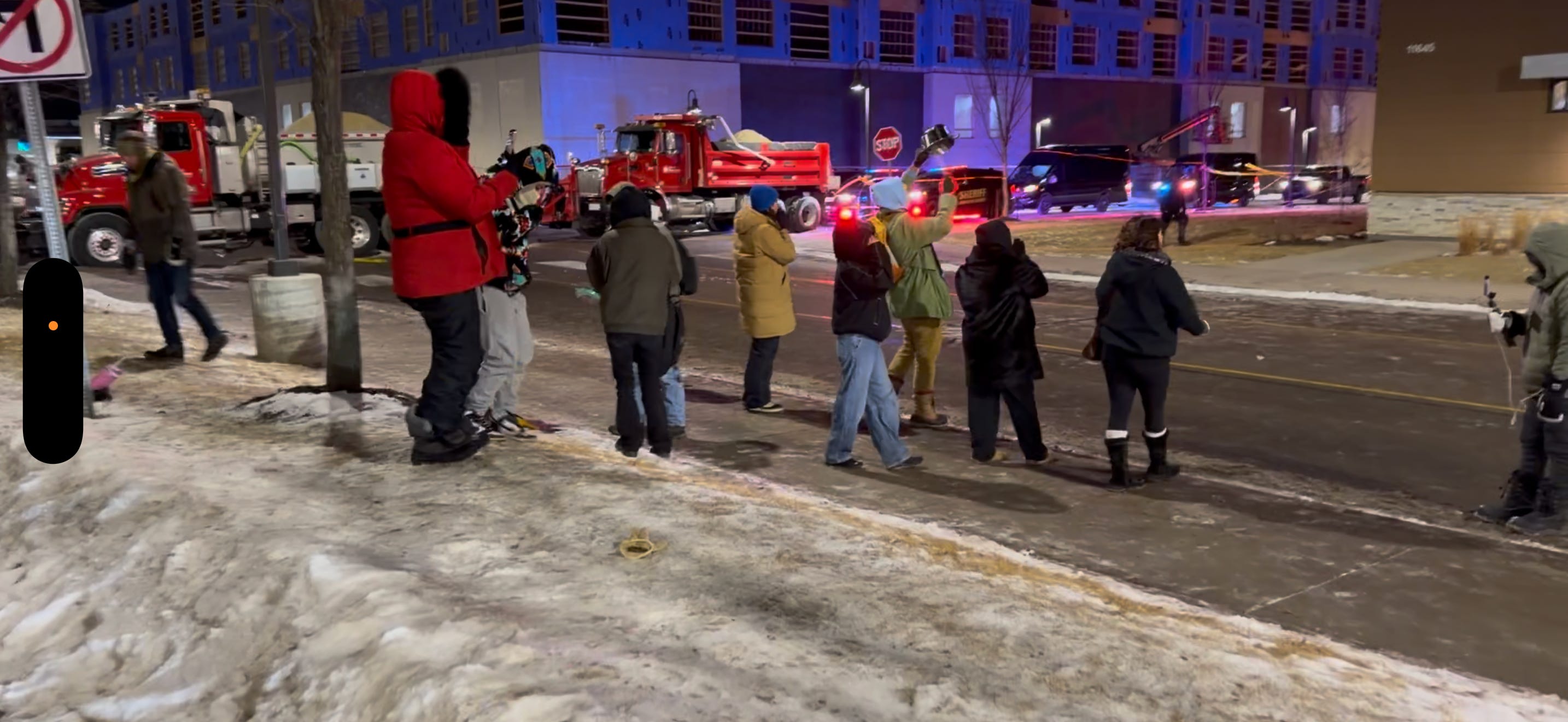
On the second night, I went to Maple Grove, where protesters gathered outside a SpringHill Suites hotel. Border Patrol Sector Chief Greg Bovino was rumored to be staying there.
The previous night, another nearby hotel had been vandalized and two arrests were made. But at this location, what I saw was whistles, drums, and pots and pans. Protesters made noise. Police arrived in full tactical gear — local, state, and federal — heavily armed.
To hear some outlets describe this as a “war zone” was surreal.
One side had percussion instruments.
The other looked ready for Fallujah.
An unlawful assembly was declared. Tear gas was deployed. A handful were arrested for refusing to disperse.
But I saw no firearms from protesters. No rocks thrown. No property damage at that site.
Yet the “war zone” narrative persists.
The Memorial
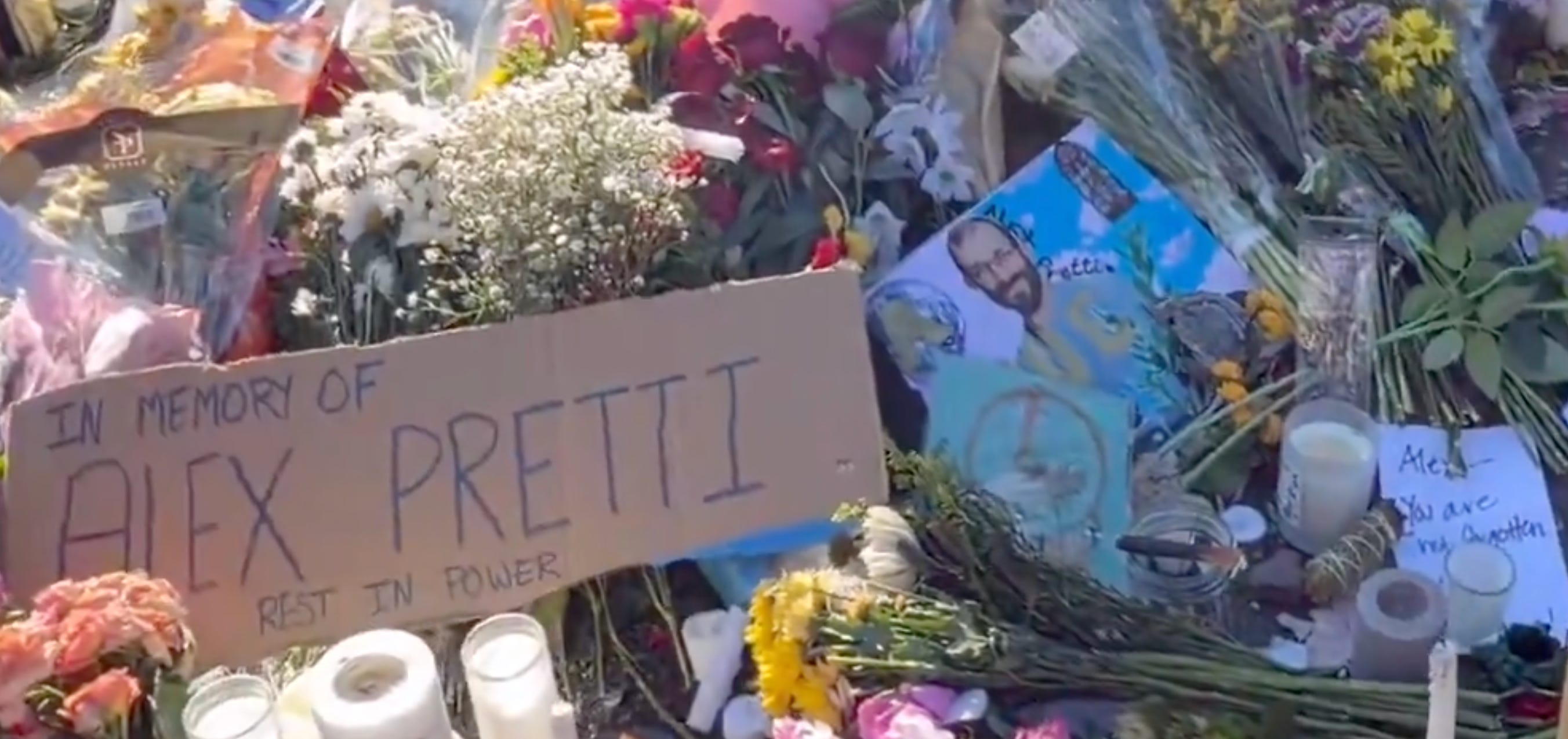
The memorial for Alex Pretti changed my perspective.
Every day, ordinary Minnesotans visited the site. Not activists. Not paid operatives. Families. Community members. People visibly shaken.
This wasn’t simply protesters versus ICE. It was grief layered over politics. A community trying to process trauma.
That nuance rarely makes national headlines.
The Café That Opted Out
I also visited Modern Times Café — now calling itself Postmodern Times. A leftist café that became something of a gathering space for activists.
The owner made a controversial decision: shifting to a donation-only model and publicly stating he would not financially support what he believed was enforcement harming his community. He even refused service to federal agents.
You may disagree with his stance. Many will.
But his actions weren’t about a paycheck. It was about conviction.
The Rally
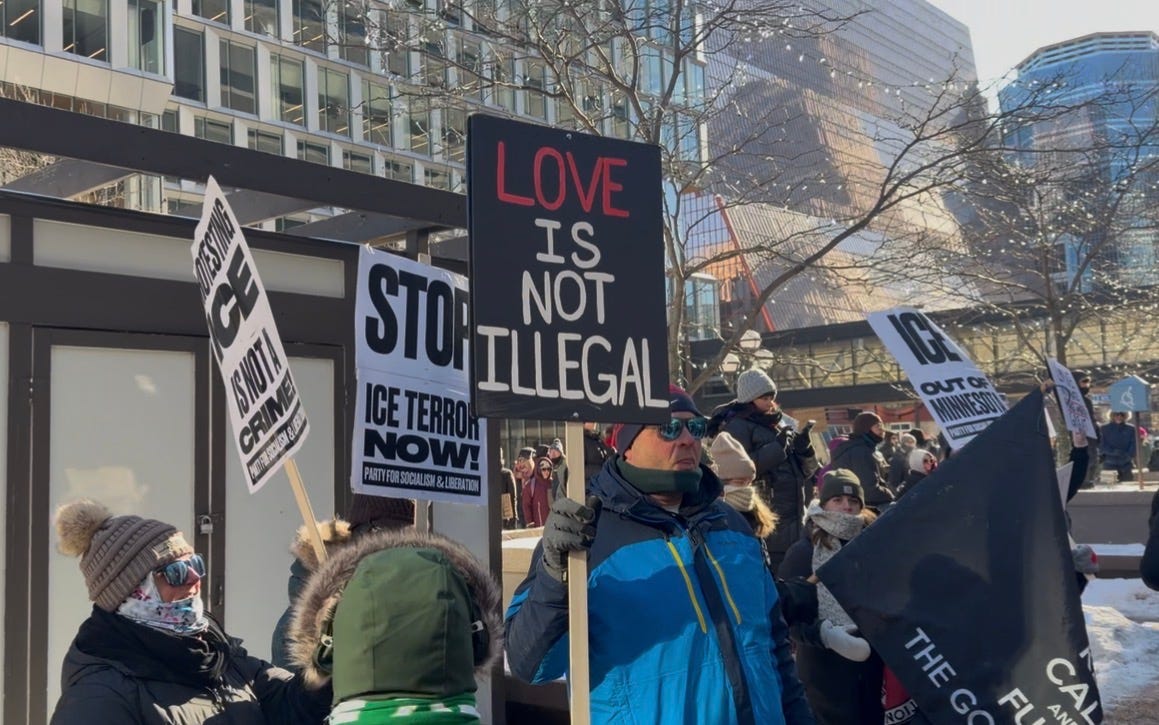
On my final day, nearly 100,000 people gathered downtown.
This was one of the largest I’ve seen in person and I’ve covered a lot of events.
And it didn’t look corporate. No slick signage. No mass-produced branding. Most signs were handmade. Cardboard and markers. Personal messages.
People brought cookies. Egg rolls. Hot cocoa. Tea.
It felt less like a riot and more like a neighborhood potluck with a political message.
They believed ICE was harming their community. Whether you agree or not, I think that belief was sincere.
So — Did I Get My Answers?
Why were they there?
They believed ICE was acting unlawfully and harming their neighbors.
Were they being paid?
Every single person I interviewed denied it. And none showed signs of being anything other than ordinary people moved by conviction.
What did they hope to achieve?
Some wanted ICE abolished. Others simply wanted reform. But almost all said the same thing: they wanted their families and neighbors to feel safe again.
To not live in fear.
To not be profiled.
To not be abducted.
At the end of the week, what struck me most wasn’t division — it was sincerity.
Minnesota is not a caricature. Its people aren’t props in a cable news narrative.
They are Americans wrestling with what kind of country they want to live in.
And whether you agree with them or not — they deserve to be heard.
And all I simply did was listen to them. You should too.
Thank you so much for all you do Craig. Aloha from Honolulu. I am so heartened by the people of Minneapolis. They are the true protectors of America
Yo Pasta, welcome to Substack, if this is horribly timed, I blame the SS algo ✌️